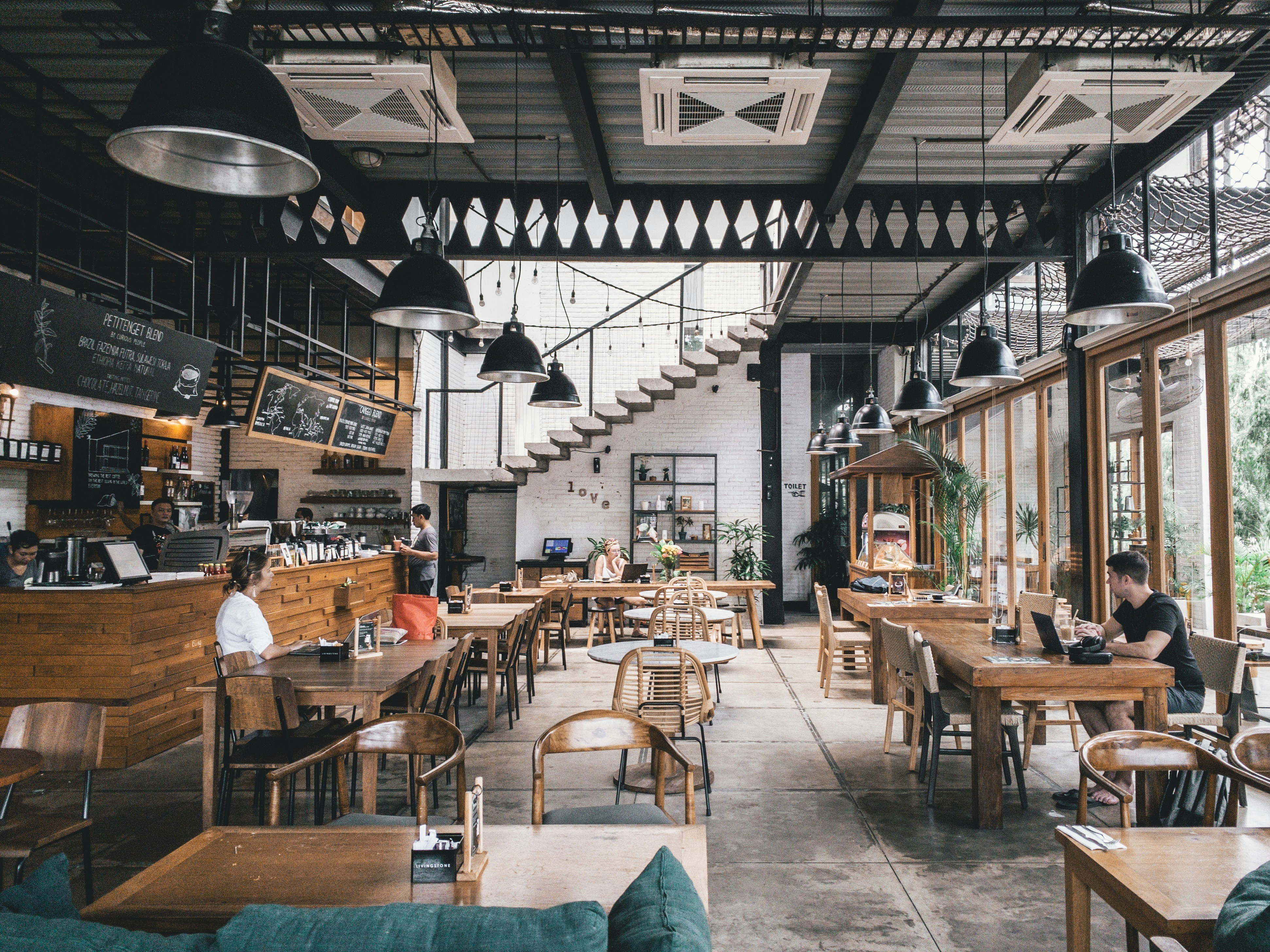
For decades, opening a restaurant meant one thing: high risk. Rent, staff, equipment, marketing, permits—most restaurants fail within the first few years.
But in cities like Atlanta, a new model has been reshaping the industry without most people noticing. That model is the food hall.
At the center of this shift is Krog Street Market—a place that represents more than just dining. It represents a structural change in how food businesses are built, tested, and scaled.
👉 Food halls are not replacing restaurants overnight. They are replacing the old system of how restaurants are launched. And that changes everything.
1. What Makes a Food Hall Different From a Restaurant?
A traditional restaurant is simple in structure:
- One brand
- One kitchen
- One concept
- One risk owner
A food hall flips that model completely. Instead of one business, you get:
- Multiple independent vendors
- Shared seating areas
- Shared foot traffic
- Lower startup costs
- Faster customer turnover
At Krog Street Market, this creates a mini food ecosystem instead of a single dining experience. Customers don't come for one restaurant—they come for variety.
2. Why Food Halls Are Exploding in Cities
Food halls are growing because they solve three major problems in the restaurant industry:
Problem 1: High Startup Costs
Opening a full restaurant can cost hundreds of thousands of dollars. Food halls reduce that dramatically by:
- Sharing kitchen infrastructure
- Providing built-out spaces
- Reducing renovation costs
- Lowering upfront risk
This allows chefs and small food entrepreneurs to start faster.
Problem 2: Unpredictable Customer Flow
Standalone restaurants rely heavily on:
- Marketing
- Location luck
- Brand awareness
Food halls eliminate much of this uncertainty because they already have:
- Built-in traffic
- Shared discovery
- Centralized destinations
People come for the experience, not just a single brand.
Problem 3: Slow Menu Testing
In a traditional restaurant, changing your menu can be expensive and risky. In a food hall environment:
- Vendors can test concepts faster
- Adjust pricing easily
- Pivot menus based on demand
- Learn from immediate feedback
👉 This turns restaurants into fast-moving food startups instead of slow institutions.
3. Krog Street Market: A Case Study in Modern Dining
Krog Street Market is located along the Atlanta BeltLine, one of the city's most active pedestrian corridors. This location matters more than people realize.
It connects:
- Walkability
- Tourism
- Local neighborhood traffic
- Social activity zones
The result is a constant flow of people—not just diners, but explorers. And that changes behavior. People don't "decide" to eat there. They end up eating there.
🍽️ Ready to Launch Your Food Business the Smart Way?
Lovket helps food entrepreneurs navigate the food hall ecosystem, build successful concepts, and scale from startup to flagship.
4. The Psychology of Food Halls: Why People Spend More
Food halls succeed because they change how people make decisions.
In a traditional restaurant:
- You pick one place
- You commit
- You leave after eating
In a food hall:
- You browse multiple options
- You compare visually
- You feel less pressure to choose "perfectly"
- You often buy more than one item
This creates what marketers call a sampling economy. Instead of one meal, customers often experience:
- Shared plates
- Multiple vendors
- Desserts + drinks + extras from different stalls
👉 That increases average spend per visit.
5. Why Small Food Businesses Love Food Halls
For entrepreneurs, food halls solve one of the hardest problems in business: entry barriers.
Inside Krog Street Market, small vendors benefit from:
Lower Financial Risk
No massive build-out required.
Instant Exposure
Daily foot traffic already exists.
Built-In Community
Surrounded by other food entrepreneurs, not isolated competition.
Faster Feedback Loops
Customers respond immediately, allowing rapid improvements.
👉 This is why many chefs see food halls as "startup incubators for restaurants."
6. The Death of the Traditional Restaurant Model (Not Fully—But Evolving)
Traditional restaurants are not disappearing—but their role is changing.
Instead of being the default entry point into food entrepreneurship, they are becoming:
- Scaling tools
- Brand expansions
- Flagship experiences
The entry point is shifting toward food halls because:
- They are cheaper
- They are faster
- They are less risky
- They are more flexible
👉 Restaurants are becoming the "level 2," not "level 1."
7. Why Cities Are Encouraging Food Halls
Urban developers and city planners love food halls for several reasons:
- Economic Activation — They bring life to underused districts.
- Small Business Growth — They create opportunities for local entrepreneurs.
- Tourism Attraction — Food halls become destinations themselves.
- Reduced Vacancy Risk — One building can host dozens of vendors instead of depending on one tenant.
This makes food halls a low-risk, high-impact urban development strategy.
8. The Social Media Effect: Food Halls Go Viral Naturally
Another major reason food halls are replacing traditional restaurants is visibility.
Food halls are:
- Visually diverse
- Highly photogenic
- Easy to explore in one visit
- Content-rich environments
At Krog Street Market, customers don't just eat—they:
- Take photos
- Record videos
- Share experiences
- Recommend multiple vendors
👉 This turns customers into marketers. Traditional restaurants rarely achieve this level of organic content creation.
9. The Future: What Comes After Food Halls?
If food halls are the current evolution, the next stage is already forming:
- Hybrid Retail + Food + Experience Spaces — Where dining is just one part of a larger ecosystem.
- Rotating Vendor Models — Where businesses change monthly or seasonally.
- Data-Driven Food Concepts — Where menus are optimized based on real-time demand analytics.
- Micro-Restaurant Brands — Small, flexible brands operating across multiple food halls instead of one location.
👉 Krog Street Market is part of this transition—not the endpoint.
A New Era of Dining Has Already Started
Krog Street Market represents a shift that most people don't notice until it's already everywhere.
Food halls are not just a trend—they are a structural upgrade to the restaurant industry.
- They reduce risk.
- They increase opportunity.
- They speed up innovation.
- They align perfectly with modern urban life.
🧩 Final Thoughts for Lovket Pulse
Traditional restaurants still matter—but the path into the industry has changed forever.
And in cities like Atlanta, that change is already visible on every plate.

Lovket Pulse Team
Expert insights on food hall economics, restaurant innovation, and culinary entrepreneurship. We help food businesses navigate the new landscape of modern dining.