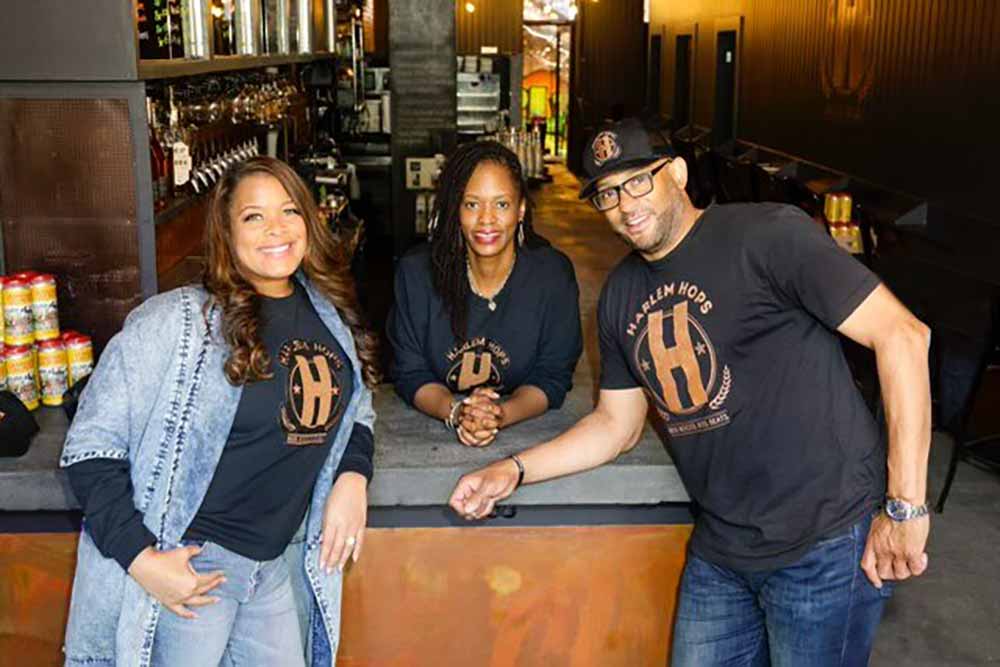
NEW YORK, NY — In Harlem, a craft beer bar might not sound like the most obvious business idea.
But when Kim Harris, Stacey Lee Spratt and Kevin Bradford looked around their neighborhood, they saw an opportunity.
They were all graduates of historically Black colleges and universities. They loved craft beer, but Harris in particular saw a problem: she often had to leave Harlem to find the kind of beer experience she wanted.
So the three entrepreneurs decided to build it themselves.
👉 In 2018, they opened Harlem Hops, which describes itself as Manhattan's first 100% African American-owned local craft beer bar.
But the business became about much more than beer.
Harlem Hops has built its identity around local businesses, Black history, community, education and creating a place where people can gather.
And that makes its story worth studying—not just for people in the restaurant industry, but for anyone trying to build a memorable small business.
🍺 The Business Started With a Problem
One of the best businesses often starts with a simple question:
"Why doesn't this exist?"
For Harris, the answer was craft beer. She wanted a place in her own Harlem neighborhood where she could enjoy quality craft beer without traveling elsewhere.
Harris had already begun working on a business plan when she connected with Bradford and eventually brought Spratt into the partnership. The three combined different strengths and backgrounds to develop the concept.
That combination became important. The founders weren't identical. They brought different skills to the company.
👉 You don't necessarily need three people who think alike. You need people whose strengths complement each other.
🎓 Three HBCU Graduates, One Business
Harris and Spratt attended Clark Atlanta University, while Bradford attended Hampton University. Their HBCU backgrounds became an important part of the company's identity.
The founders have talked about how their HBCU experiences helped shape their approach to entrepreneurship, community and education.
When Harlem Hops opened its doors in June 2018, it became the first 100% Black-owned craft beer bar in Harlem, according to contemporary reporting.
That gave the business an immediate point of differentiation. But simply being first wasn't enough. The founders needed customers to have a reason to return.
That's where the concept became much more interesting.
🍻 They Didn't Just Sell Beer
Harlem Hops could have taken the traditional route: Buy beer. Put it on tap. Sell it.
Instead, the founders built a much more specific identity.
The company's current website says it focuses on local breweries and hard-to-find beers, including products from small-batch and family-owned businesses and, in some cases, breweries owned by people of color.
That gives Harlem Hops a story. Customers aren't simply choosing between one beer and another. They're discovering breweries. They're learning about the history of beer. They're supporting smaller producers. And they're participating in a Harlem business built around community.
👉 The product is beer. The experience is Harlem Hops.
📚 Turning Beer Into a History Lesson
One of the most unusual parts of the Harlem Hops experience is the way the business connects beer to Black history.
The founders have highlighted the long history of brewing in Africa and the contributions of Black people to the beer and brewing industry.
CBS New York reported that the bar incorporates historical information into its space and uses the business to help customers understand the African and African-American roots of beer.
That's a clever way to differentiate a business. Instead of simply telling customers: "We have good beer." Harlem Hops can tell customers: "There's a story behind what you're drinking." And stories make products more memorable.
🤝 The Power of Supporting Other Small Businesses
Harlem Hops has also made supporting smaller breweries part of its business identity. The company says it works with local breweries and seeks out niche and innovative beers. Its approach has also emphasized beers from underrepresented producers.
In 2022, NY1 reported that the bar placed special emphasis on beers from people of color and women-owned businesses.
This creates an interesting business model. Harlem Hops isn't simply building its own brand. It's creating a platform for other brands.
That can be powerful. A business becomes more valuable when people associate it with discovery. Customers begin asking: "What's new here?" rather than simply: "What's cheapest?"
💪 The Business Was Tested by COVID-19
Then came 2020. Like thousands of restaurants and bars across New York City, Harlem Hops faced a devastating disruption when COVID-19 restrictions shut down normal operations.
The business had been busy before the pandemic, with neighborhood residents, workers, students and visitors filling the space. Then suddenly, the normal business model disappeared.
Harlem Hops had to pivot. The owners moved toward takeout and delivery while continuing to work on supporting the community. Visa documented the company's pandemic response and highlighted the founders' emphasis on adapting quickly.
👉 A business cannot always control what happens around it. But it can control how quickly it responds.
🏘️ When a Business Becomes Part of Its Community
Perhaps the most powerful part of the Harlem Hops story is what happened beyond selling beer.
The founders created Harlem Hopes, a nonprofit connected to the business that provides scholarships for Harlem residents attending HBCUs. CBS New York reported that giving back through education became central to the company's mission.
The founders have explained the idea simply: The community supports the business. The business should support the community.
👉 That's a powerful relationship. It turns customers into participants in something bigger.
📈 The Harlem Hops Model: Business + Community
Think about the difference between these two businesses.
Business A: Product → Customer → Transaction
Harlem Hops: Product → Experience → Community → Education → Relationships
The second model gives customers more reasons to care. That's why the company has become more than a bar. It has become a recognizable part of the neighborhood's business and cultural landscape.
🚀 They Also Learned to Expand the Brand
Harlem Hops hasn't remained limited to its original Harlem storefront. The brand expanded to Market 57 at Pier 57, giving it another presence in New York City. Reporting on the expansion described the company's continuing focus on Black beer culture and community.
And in 2024, the founders brought the Harlem Hops concept to Atlanta, connecting the business back to the HBCU network through the founders' Clark Atlanta University roots.
Expansion can be dangerous for a small business. Growing too quickly can dilute what made the original business special. Harlem Hops' challenge—and opportunity—is to expand while maintaining the identity that made the Harlem location distinctive.
📊 A 2026 Look at the Business
Harlem Hops continues to operate its Harlem location and has a second location at Pier 57.
In 2026, Square profiled the company as a two-location business and highlighted its community-first approach. The company continues to prioritize small, local and Black-owned beer brands, and the founders have turned down partnerships that didn't align with their values.
That last part is particularly interesting from a business perspective. Because sometimes what you refuse to sell can be as important as what you sell.
A brand needs boundaries. If every partnership is accepted simply because money is attached to it, the brand can eventually lose its identity. Harlem Hops has instead tried to make its values part of the decision-making process.
🍺 Ready to Build a Community-Driven Brand?
Lovket helps businesses create iconic brands, build community connections, and tell stories that resonate. Let's turn your vision into a movement.
📋 6 Business Lessons Entrepreneurs Can Learn From Harlem Hops
1. Solve a Problem You Personally Understand
Harris didn't start with a giant market report. She experienced the problem herself. She wanted better craft beer options in Harlem. That gave her a personal understanding of the customer.
The lesson: If you're looking for a business idea, pay attention to the things you constantly complain about. Ask: "What problem do I keep seeing that nobody is solving well?"
2. Build Around Your Community
Harlem Hops wasn't dropped randomly into Harlem. The neighborhood is part of the brand. The name. The history. The customers. The partnerships. The mission. That's powerful.
A local business should ask: "What does my neighborhood need?" not only "What can I sell here?"
3. Don't Compete Only on Price
If your only advantage is being cheaper, eventually someone can undercut you. Harlem Hops competes through: Selection, Experience, Culture, Community, Storytelling, Relationships. That's harder to copy.
👉 Compete on meaning, not just price.
4. Make Your Business Educational
Education can be a powerful marketing tool. Harlem Hops uses the history of brewing to create a deeper experience around its product. You can do the same thing with almost any business.
- A clothing brand can explain fashion history.
- A restaurant can tell customers where ingredients come from.
- A beauty company can teach customers how products work.
- A marketing agency can teach business owners how to grow.
When you educate customers, you create authority.
5. Turn Customers Into a Community
The best local businesses aren't just places people purchase from. They're places people belong to. Harlem Hops has intentionally created an environment where people can gather, socialize and connect. Its own description emphasizes gathering and community.
That's an enormous competitive advantage. A competitor can copy your product. They can't easily copy the relationships you've built.
6. Let Your Values Guide Your Growth
Harlem Hops has made community investment and support for underrepresented brewers part of its identity. That's not just marketing. It's a filter for business decisions.
The 2026 Square profile specifically highlighted the founders' willingness to turn down partnerships that didn't offer genuine engagement with their communities.
👉 Don't just ask, "Will this make money?" Also ask: "Does this make sense for the brand we're building?"
🏆 What Harlem Hops Gets Right
Harlem Hops' biggest competitive advantage may not be its beer. It's clarity. The company knows what it wants to represent.
It's about: Harlem. Craft beer. Black entrepreneurship. Community. History. Education. Connection.
When those pieces work together, the business becomes much harder to replace.
🌍 The Bigger Lesson for Black-Owned Businesses
New York City has thousands of Black-owned businesses, but Black entrepreneurs remain underrepresented among the city's business owners.
The city's Black Entrepreneurs NYC (BE NYC) initiative says Black New Yorkers make up about 22% of the city's population, while Black entrepreneurs own only a small share of NYC businesses. The city created BE NYC to help more Black entrepreneurs launch and grow.
That makes businesses like Harlem Hops important beyond their individual sales. They demonstrate what ownership can look like when a business is connected to a neighborhood. And they show aspiring entrepreneurs that a business can simultaneously be: profitable + cultural + community-focused.
Those ideas don't have to compete.
🔥 Final Takeaway: Don't Just Open a Business. Build a Place People Remember.
Harlem Hops began with three entrepreneurs who saw an opportunity. They wanted better craft beer in Harlem. But they didn't stop there.
They built a brand around the neighborhood. They highlighted businesses that often don't receive enough attention. They connected beer to Black history. They created a scholarship initiative. They survived one of the hardest periods the restaurant industry has faced. And they expanded the brand beyond the original location.
That's what makes Harlem Hops such an interesting business case.
🧩 Final Thoughts for Lovket Pulse
The strongest small businesses don't just sell something. They create an identity around what they sell.
👉 And when customers connect with that identity, a business becomes more than a transaction. It becomes part of the community.
🔍 SEO Information for Lovket Pulse
SEO Title: How Harlem Hops Built a Black-Owned Business Around Beer and Community
Meta Description: Discover how three HBCU graduates built Harlem Hops into a Black-owned NYC craft beer business through community, culture, storytelling and smart branding.

Lovket Pulse Team
Expert insights on community-driven businesses, Black entrepreneurship, and building brands with purpose. We help businesses create meaningful connections.